Standard trail wildlife advice assumes hikers can hear a faint rattle, flick a hip-holster clip with one thumb, and sprint behind boulders. After 60, high-frequency hearing loss, thumb osteoarthritis, and stiff knees make those split-second habits fail.
For two hikers over 60 flying to Yellowstone National Park, safer trail days rely on doubled visual buffers, chest-mounted gear, and high-contrast optics. Planning around joint and hearing limits eliminates last-second scrambles.
National Park Service rules set the legal baseline before you step onto any trail. Yellowstone regulations require staying 100 yards (91 m) from bears, wolves, and cougars and 25 yards (23 m) from bison, elk, and other wildlife.
Why Standard Wildlife Rules Break Down After 60
Defensive wildlife like grizzlies and moose charge to stop threats, whereas predators like cougars and coyotes judge whether you resemble prey. That split forces hikers to switch between standing tall, backing away, and sprinting within seconds.
Stiff knees, slower lateral balance, and reduced hearing leave far less margin inside 50 yards. Checking trail conditions and terrain before choosing a route helps hikers 60+ choose open meadows with clear sightlines over noisy creek corridors.
Worked Check: Flying Into Yellowstone With Joint and Hearing Limits
Consider two U.S. hikers aged 62 and 65 flying to Yellowstone with knee osteoarthritis, thumb stiffness, and mild presbycusis. Their safety prep begins with pass fees and federal airline limits.
One America the Beautiful Senior Pass covers both hikers in one rental car at Yellowstone. Buying a digital pass on Recreation.gov costs $20 annually or $80 lifetime with zero processing fee, whereas USGS mail orders add $5 processing and $7.50 handling.
In person, hikers can trade up to four Senior Annual Passes at $20 each toward the $80 lifetime pass. Non-U.S. visitors 16+ without a $250 Non-Resident Annual Pass owe Yellowstone’s $100 per-person surcharge alongside standard entry fees.
Because the Transportation Security Administration bans bear spray in both carry-on bags and checked luggage, flyers must buy or rent canisters near the park. Canisters exceed the Federal Aviation Administration 4-fluid-ounce (118 ml) self-defense limit.
Pack sharp-tipped trekking poles in checked bags, while blunt-tipped poles may go in carry-on luggage at the TSA officer’s discretion. Keep spare lithium-ion batteries under 100 watt-hours in carry-on bags; 101 to 160 watt-hours needs airline approval.
Under TSA’s July 2025 policy, travelers of all ages (including those under 75) keep shoes on in standard lanes barring an alarm, though light jackets still come off without TSA PreCheck; TSA Cares at (855) 787-2227 takes requests 72 hours ahead.
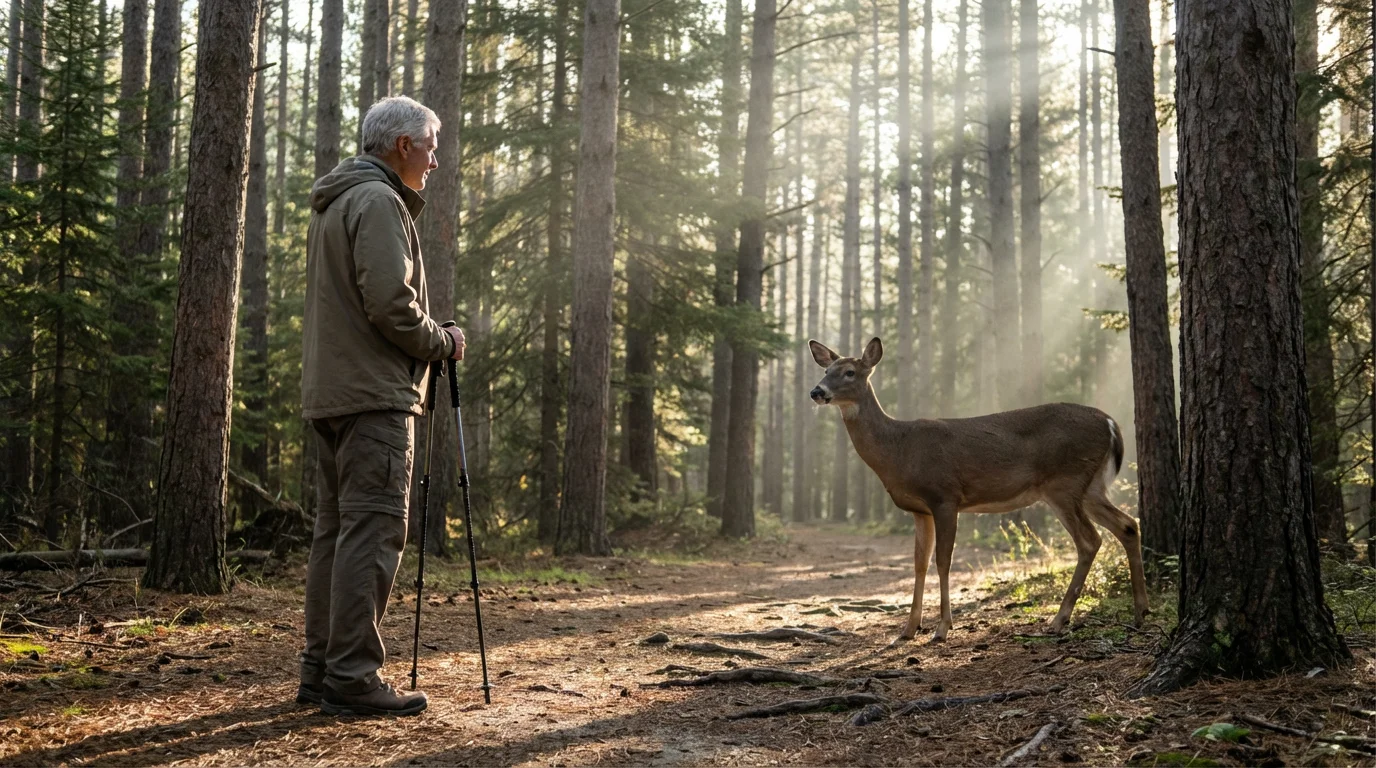
At the trailhead, pace 25 and 100 yards, then double your ungulate floor to 50 yards.
Yellowstone Distances, Physical Limits, and Adjusted Actions
| Species | NPS Minimum Distance | 60+ Physical Constraint | Adjusted Protocol and Gear |
|---|---|---|---|
| Grizzly bear | 100 yards (91 m) | Arthritic thumbs and shoulders slow rear hip reach | Carry spray in a front chest rig; draw two-handed; play dead flat on stomach only on defensive contact |
| Black bear | 100 yards (91 m) | Reduced grip force stalls stiff safety wedges | Practice with an inert canister first; never play dead on contact; strike muzzle and eyes with trekking poles |
| Moose, bison, and elk | 25 yards (23 m) | Knee pain slows sprinting over roots | Hold a 50-yard floor; pause beside wide tree trunks, boulders, or parked vehicles before raising binoculars |
| Mountain lion (cougar) | 100 yards (91 m) | Crouching strains stiff knees and mimics prey | Stay upright with ergonomic poles raised overhead; hold eye contact; fight back standing if contacted |
| Wolf and coyote | 100 yards (91 m) wolf; 25 yards (23 m) coyote | Poor balance backing uphill on gravel | Face the animal; plant trekking poles deliberately step by step; shout firmly and toss small stones |
| Rattlesnake | Outside strike range | High-frequency hearing loss misses faint buzz | Wear high-contrast copper or rose lenses; probe tall grass with poles; skip suction kits and tourniquets |
Arthritis-Friendly Bear-Spray Chest Rigs and Inert Practice Canisters
Standard bear-spray advice assumes hikers can yank a hip canister, flick a tight wedge with one thumb, and depress the trigger. Thumb osteoarthritis, swollen knuckles, and stiff shoulders turn that sequence into a fumble.
Test an inert water-and-propellant canister—such as Counter Assault Inert Practice Spray, UDAP Inert Training Spray, or Sabre Frontiersman Practice Spray—before buying live spray locally. Choose safety clips with a wide finger loop that an arthritic thumb can hook backward instead of pinching.
Skip rear hip holsters that twist an arthritic shoulder behind your waist while backing away. Front chest mounts position the canister over your sternum so either hand draws straight forward.
Two adjustable front options are the Counter Assault Bear Spray Chest Holster and Sabre Frontiersman Bear Spray Chest Holster. Hikers who struggle peeling Velcro flaps with stiff fingers can clip UDAP molded belt-and-strap holsters directly onto backpack shoulder straps.
Practice a two-handed draw at the trailhead so cold morning joints never stall deployment. Brace the canister barrel in your stronger palm, slide the safety tab back with your opposite hand, and press using your thumb base.
Pair accessible spray with a hiking group of three or more so a companion can deploy spray if cold air stiffens your hands. Groups also look larger and provide immediate help during a retreat.
High-Contrast Trail Scanning Tools for Reduced Hearing and Depth
High-frequency hearing loss erodes snapping twigs, rustling willows, and rattlesnake buzzes beneath wind or creek noise. Shifting early detection from ears to high-contrast optics protects your margin.
Dark gray lenses flatten forest shadows, blending dark bear hides and coiled reptiles into pine duff. Copper, amber, or rose lenses—such as Oakley Prizm Trail Torch, Smith ChromaPop Bronze Mirror, and Maui Jim HCL Bronze—sharpen edge contrast across sun-dappled brush and scree.
Carry compact binoculars like Vortex Diamondback HD 8×32 or Nikon Monarch M5 8×42 in a quick-access chest harness rather than inside your pack. Eight-power binoculars or a lightweight wildlife photography kit let you inspect dark shapes on distant slopes from 100+ yards instead of walking closer.
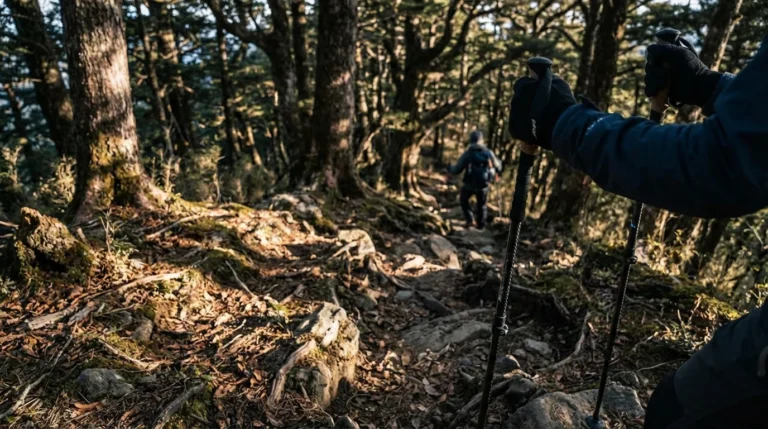
Adjustable trekking poles with angled cork grips, such as Black Diamond Trail Ergo Cork, reduce wrist and thumb strain on uneven grades. Extend a pole tip ahead to tap tall grass, rock crevices, and blind turns before your boot lands.
Never walk while holding binoculars to your eyes on uneven dirt. Plant both poles on solid footing before raising optics to scan willow flats.
Charging-Moose Evasion and Snakebite Rules When Footing Slows
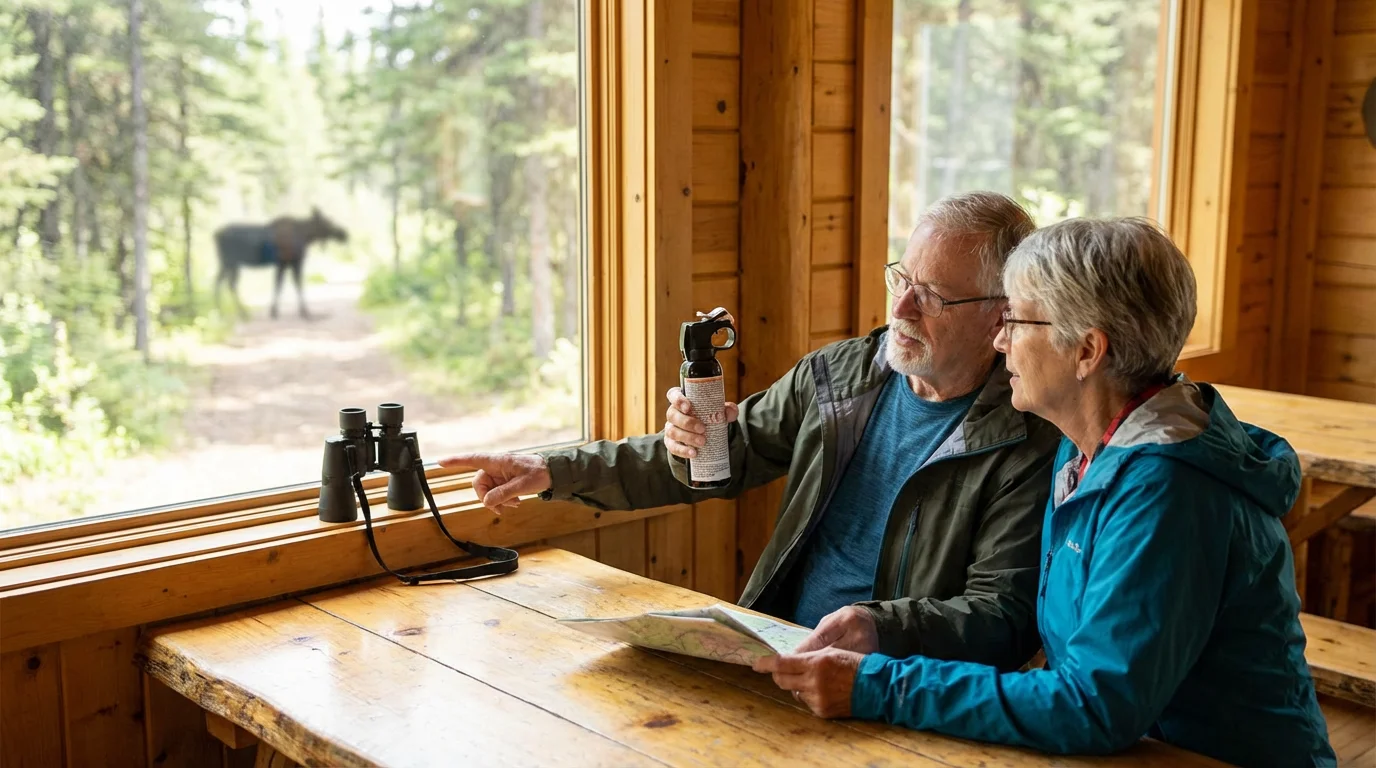
Moose injure more people in parts of Alaska and the northern Rockies than bears do, especially cows with calves and autumn bulls. Laid-back ears, raised hackles, and lip licking signal agitation early.
Moose guidance tells hikers to sprint behind a boulder, wide trunk, or vehicle, since blocking their sightline usually stops pursuit. Over roots and loose gravel, sprinting risks a fall directly ahead of an agitated animal.
Hold a 50-yard floor whenever stiff knees slow your stride, and stage yourself beside wide tree trunks or trailhead cars before pausing. On sunny ledges, keep your gaze two strides ahead, wear over-the-ankle boots, and inspect the far side of logs before stepping.
If bitten, follow American Red Cross snakebite steps: move out of strike range, call 911 or trigger an SOS, and remove rings and watches before swelling starts. Immobilize the limb near heart level while awaiting transport for antivenom.
Leave suction kits, knives, tourniquets, and ice at home, as CDC guidance and Wilderness Medical Society guidelines advise against them. Research shows suction extractors remove virtually no venom while worsening tissue injury.
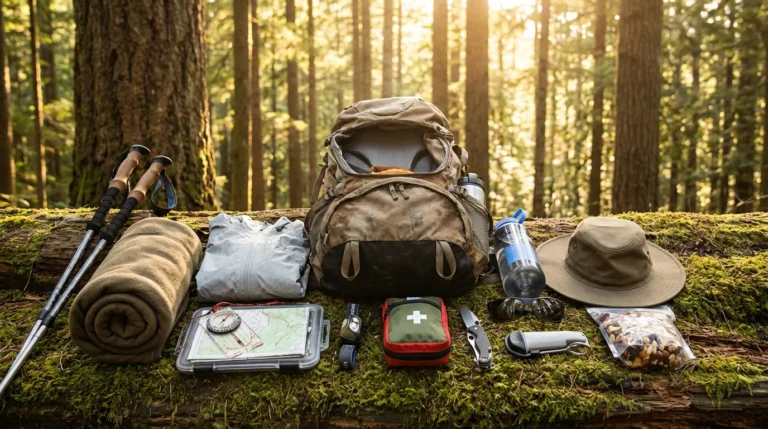
CDC rules also warn never to cut a bite wound, suck venom, or immerse the limb in cold water. Pack essential emergency and trail gear including a satellite communicator so emergency clinicians—not field kits—direct evacuation.
Pre-Hike and Trail Routine for Yellowstone Day Hikes
Consistent habits prevent most close wildlife encounters before an animal ever feels crowded. Apply this seven-step routine from breakfast planning through the final trailhead mile.
- Check morning park alerts: National Park Service superintendents post temporary bear closures, carcass warnings, and food-storage mandates daily, so review visitor-center boards before driving to the trailhead.
- Hike bright mid-day windows: Schedule hikes between mid-morning and mid-afternoon when overhead sunlight helps high-contrast lenses spot wildlife early and predators are less active than at dawn or dusk.
- Use human voices over bells: Park biologists warn that bear bells are ineffective over wind and rushing water, and high-pitched jingles fade quickly for hikers with presbycusis.
- Call out before blind bends: Speak calmly and clap once near creek crossings or dense willows so wildlife hears people approaching at 100+ yards.
- Keep pets leashed where permitted: Off-leash dogs provoke bears, bison, and moose and often sprint straight back to slower handlers with a pursuing animal behind them.
- Seal every scented item: Store lunches, wrappers, lip balm, and sunscreen inside hard-sided bear canisters or sealed bags whenever stopping along the trail.
- Never feed roadside wildlife: Offering snacks to chipmunks, marmots, or elk violates federal rules, spreads disease, and forces rangers to euthanize habituated animals.