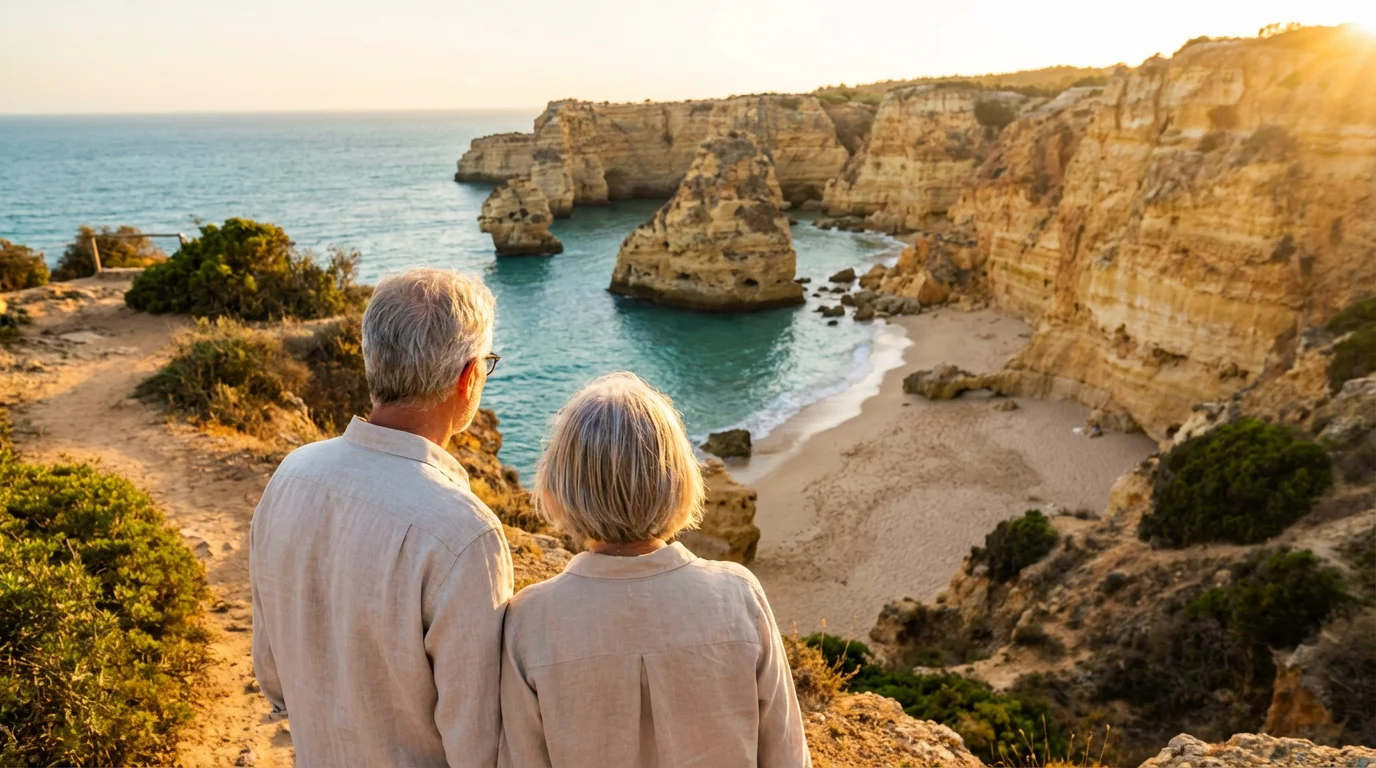
Portugal’s Algarve coast splits between flat barrier-island lagoons in the east and steep limestone cliffs in the west. Picking the wrong base town locks you into steep beach staircases or late-night bar strips.
Flat coastal hubs along the regional rail line let you walk to cafes, ferries, and dune boardwalks without renting a car. Travelers 65 and older also ride regional and intercity trains at half fare regardless of nationality.
Flat Lagoon Bases Versus Steep Cliffside and Party Towns
Eastern and central lagoon towns offer the gentlest terrain for daily walking. Tavira sits mostly level along both banks of the Gilão River, while Alvor clusters around a flat fishing harbor connected directly to marshland boardwalks.
Vilamoura centers on a wide, paved marina loop flanked by level resorts and flat access toward neighboring Quarteira. By contrast, Carvoeiro drops steeply down hillside roads into a tight cove, requiring constant climbs back to hillside lodging.
Albufeira splits into an old town with steep lanes and the Praia da Oura district, locally known as “The Strip.” Expect loud late-night bars, stag-party crowds, and heavy summer foot traffic near Praia da Oura rather than quiet evening dining.
Lagos works as a balanced middle option if you choose accommodations carefully. Its historic center and marina promenade sit mostly flat beside wide Meia Praia, though southern cliff coves require steep stairs or short taxi rides.
Walkability, Rail Links, and Winter Openness Across Five Towns
| Base Town | Terrain and Street Grade | Rail and Bus Access | Beach Access | November to March Openness |
|---|---|---|---|---|
| Tavira | Mostly flat riverfront; traditional cobblestone alleys | CP Algarve Line train station plus Vamus Algarve local buses | Flat ferry ride from town pier to level Ilha de Tavira sandbar | Year-round residential town; restaurants and markets stay open |
| Alvor | Flat harbor core; gentle incline up residential streets | No train station; Vamus buses and short taxis from Portimão rail | Step-free entry to 6-kilometer wooden dune boardwalk | Quiet village pace; core cafes stay open while beach huts close |
| Vilamoura | Wide, paved level paths around marina and resorts | Vamus bus links; nearest CP train station sits inland at Loulé | Level paved promenade west to Falésia and east into Quarteira | Golfers keep resort services running; calmer than summer |
| Lagos | Level marina and lower old town; hills rise toward outer cliffs | Western terminus of CP Algarve Line plus Vamus regional bus hub | Flat boardwalk access at Meia Praia; cliff stairs at southern coves | Active winter-stay community; most central shops stay open |
| Carvoeiro | Steep valley slopes flanking a narrow town square | No direct train; Vamus bus transfers via Lagoa or Estômbar | Street-level sand at town cove; steep climbs to clifftop trails | Many seasonal restaurants and villas close between November and February |
Step-Free Boardwalks, Praia Acessível Flags, and Cliff Staircases
Skip cliffside stairs by targeting beaches with purpose-built boardwalks and municipal accessibility infrastructure. The 6-kilometer (3.7-mile) elevated wooden boardwalk at Praia de Alvor winds across coastal dunes and estuary flats with benches and zero steps.
For urban seafront walking, the paved promenade linking Vilamoura Marina and Quarteira stays level beside cafes and shaded seating. Near Lagos, Meia Praia offers wide, flat sand backed by low wooden walkways and beach restaurants.
Portimão’s Praia da Rocha provides a wide boardwalk behind expansive sand, giving travelers a level beachfront alternative to Albufeira’s noisy Praia da Oura. In Tavira, flat passenger ferries cross the Ria Formosa lagoon to Ilha de Tavira’s level wooden walkways.
Look for Portugal’s “Praia Acessível” (Beach for All) flag during the summer lifeguard season. Designated beaches provide step-free ramps, accessible restrooms, and lifeguard-assisted amphibious beach chairs for water entry, complementing our accessible travel options guide.
Treat western coves like Praia Dona Ana and Praia do Camilo as clifftop viewpoints rather than swim stops if stairs are difficult. At Praia do Camilo, Visit Algarve warns of a long wooden staircase and landslide-risk restrictions below the upper terrace.
At Ponta da Piedade near Lagos, clifftop wooden boardwalks deliver sea-stack views on level footing without descending to the water. By contrast, small-boat cave tours departing Lagos Marina require stepping down from floating pontoons into open boats.
Even flat historic towns such as Tavira and Faro’s walled Cidade Velha lay polished limestone cobblestones (calçada portuguesa) that turn slick after morning dew or rain. Pack supportive, slip-resistant walking shoes before tackling town centers.
Seven Algarve Beaches and Headlands Compared for Footing
| Beach or Headland | Nearest Base | Surface and Length | Step-Free or Stair Access |
|---|---|---|---|
| Praia de Alvor | Alvor | 6-kilometer (3.7-mile) elevated wooden dune boardwalk with benches | Step-free entry from harbor end |
| Vilamoura–Quarteira Promenade | Vilamoura | Paved seafront walkway linking marina and town center | Level grade beside cafes and seating |
| Meia Praia | Lagos | Wide sandy shore backed by low wooden walkways | Level paths behind sand; no cliff descent |
| Praia da Rocha | Portimão | Wide elevated wooden boardwalk behind expansive sand | Step-free boardwalk access along seafront |
| Ilha de Tavira | Tavira | Barrier-island sandbar with level wooden walkways | Flat passenger ferry from Tavira pier |
| Ponta da Piedade | Lagos | Clifftop wooden boardwalks above sea stacks | Level viewing only; cave boats require pontoon step-down |
| Praia do Camilo | Lagos | Upper cliff terrace overlooking narrow cove | Long wooden staircase; landslide-risk restriction below terrace |
Faro Arrivals, 50% CP Senior Rail Fares, Vamus Buses, and Tolls
Faro Airport (FAO) serves as the region’s central air gateway, with United Airlines operating seasonal nonstop flights from Newark (EWR) from May through September. Other U.S. departures connect in one stop through Lisbon, Porto, or European hubs.
Under U.S. Department of Transportation rules (14 CFR Part 382), airlines flying from the United States must provide free airport wheelchair assistance upon request, which is best arranged when booking your ticket.
Passengers arriving in Lisbon can ride CP Alfa Pendular or Intercidades trains from Lisbon Oriente south to Tunes and Faro. From Faro, CP’s regional Algarve Line runs east to Vila Real de Santo António and west to Lagos.
Passengers age 65 and older receive a 50% CP senior discount on Alfa Pendular, Intercidades, and Regional trains regardless of nationality or residency. Select the senior fare online or at station ticket desks, and carry your passport on board for age verification.
Away from rail stations, regional and intertown buses run under the Vamus Algarve bus network, operated by Vizur, which replaced legacy local EVA Transportes branding. Long-distance coaches to Lisbon and Seville operate through Rede Expressos and EVA terminals in major towns.
Uber and Bolt operate across coastal hubs, offering upfront pricing for short hops like Portimão station to Alvor or up to hilltop Silves Castle. Loulé and Olhão municipal markets also offer flat indoor aisles reachable by taxi or bus.
Renting a car helps for inland hill villages like Monchique, though narrow medieval streets make urban parking stressful. Before leaving Faro Airport, confirm a Via Verde transponder and check Infraestruturas de Portugal motorway toll rules to avoid unpaid electronic-gantry rental fees.
For a three-week car-free split, start with 10 nights in Tavira for flat river walks and ferries to Ilha de Tavira. Connecting through Lisbon instead of a landside London transfer avoids UK border transit paperwork.
Then ride the CP regional train west from Tavira to Portimão using the 50% age-65+ discount. From Portimão station, take a short taxi or Vamus bus to Alvor for 11 nights beside the 6-kilometer dune boardwalk.
U.S. arrivals clear biometric EU Entry/Exit System (EES) border checks under Schengen 90/180-day passport rules, while landside UK transfers require a £20 UK ETA; see our international passport and border guide for full entry and ETIAS details.
Because Original Medicare excludes routine care abroad and Medigap foreign emergency coverage carries a $250 deductible and $50,000 lifetime cap, review senior travel insurance options before departing.
Shoulder Months, Winter Apartment Heating, and Coastal Tides
April through May and September through October bring comfortable daytime temperatures for walking without July and August peak heat or packed beaches. Ocean temperatures stay warmest in September and early October after summer sun.
Winter stays from November through March deliver mild daytime sun and lower apartment rates, though small resort eateries and seasonal beach kiosks close. Base yourself in year-round towns such as Tavira, Lagos, or Quarteira rather than seasonal cliffside villages.
Older Portuguese apartments feature tile floors and little insulation, which can feel chilly and damp on winter evenings. Confirm reverse-cycle air conditioning (heat-pump units) and a dehumidifier when booking multi-week winter rentals.
When swimming or walking narrow cove sands year-round, check local tide tables before descending because rising water can cut off narrow beaches. Favor lifeguarded stretches during summer and respect yellow or red coastal surf flags.