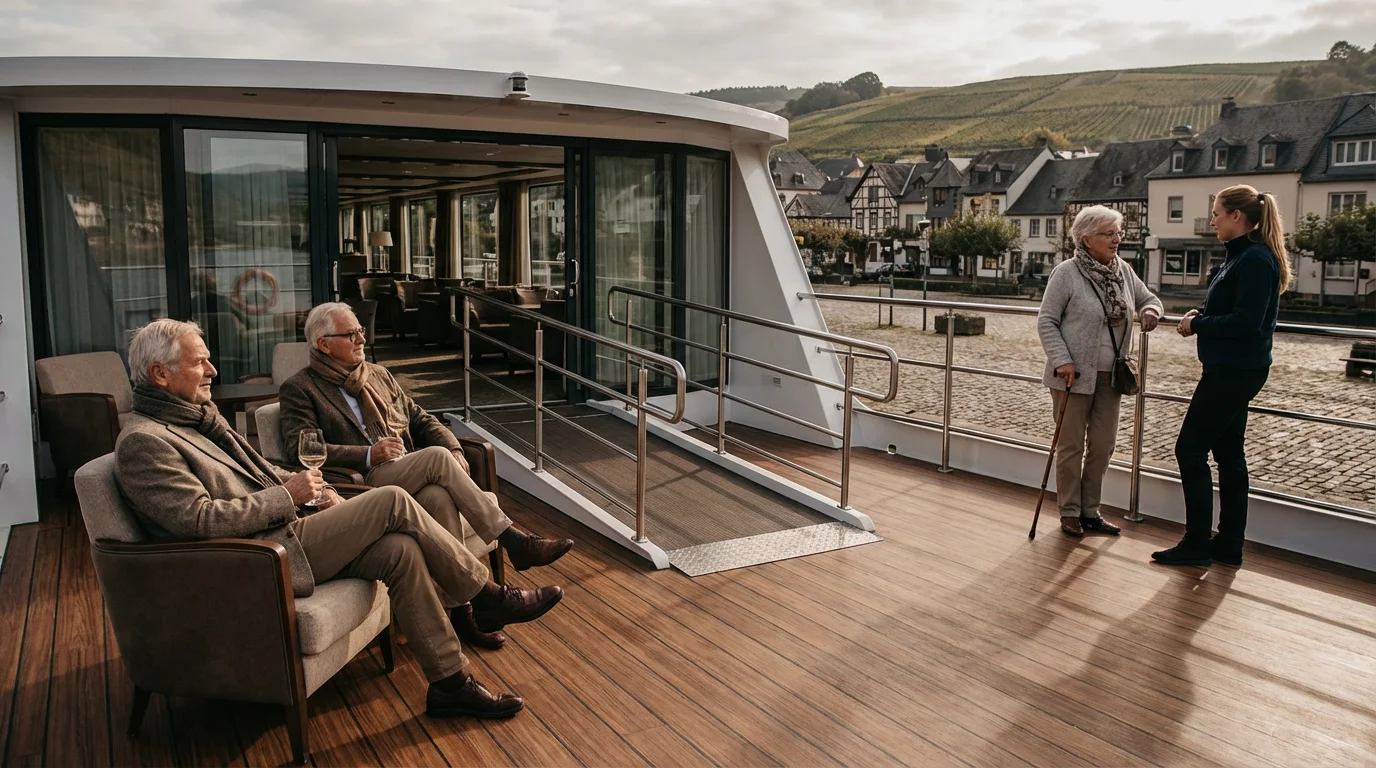
European river cruise ships are not governed by the U.S. Americans with Disabilities Act, and narrow canal locks cap ship width, elevator reach, and cabin dimensions. Unlike large ocean liners, riverboats rarely include roll-in-shower cabins or step-free access to every passenger deck.
Travelers using canes or folding walkers who handle occasional stairs and uneven stone streets can still cruise comfortably by matching cabin deck and itinerary to their stamina. Full-time wheelchair and heavy mobility scooter users face strict shipboard and excursion bans across major lines.
Three Physical Limits That Separate Riverboats From Ocean Ships
Ocean vessels measure dozens of yards across and carry multiple elevator banks, whereas European riverboats must fit the 12-meter lock width along the Rhine-Main-Danube corridor. That structural ceiling shrinks hallways, cabins, and ramps across every major river fleet.
Review the broader trade-offs in our senior cruising guide before committing a deposit. Three onboard and port realities decide whether a European riverboat works for your mobility level:
- Sun Deck stairs: Low river bridges require retractable wheelhouses and flush upper decks, so riverboat elevators stop at least one deck below the open-air Sun Deck.
- Ship-to-ship rafting: In crowded ports, two to four boats moor side by side, forcing passengers to cross an adjacent ship’s lobby or climb over its Sun Deck stairs to reach the pier.
- Steep gangways and riverbanks: Seasonal water shifts alter deck height relative to the quay, turning boarding ramps steep and slippery during high or low water.
Ship-to-ship rafting is unpredictable because port authorities assign berths daily. When adjacent vessels have matching lobby heights, passengers walk straight across two reception areas, but mismatched vessels force everyone up to the Sun Deck, across a narrow bridge plank, and back down stairs.
How Viking, AmaWaterways, and Scenic Accessibility Rules Compare
Marketing brochures often emphasize hotel-style comfort, so check each operator’s written terms before reserving a stateroom. The table below summarizes published vessel specifications and disability policies for major European river operators.
| Operator or Ship Class | Elevator Deck Coverage | Companion and Crew Policy | Wheelchair and Shore Limits |
|---|---|---|---|
| Viking Longships (such as Viking Var) | Middle and Upper decks only; no elevator to Main Deck or Sun Deck | Disabled guests need an able-bodied companion; crew cannot lift guests or push wheelchairs | Strict wheelchair width limits; dedicated accessible cabins scarce |
| AmaWaterways (Standard Fleet) | Varies by vessel; no elevator access to Sun Deck | Ships not equipped with dedicated facilities for limited mobility | Excursion motorcoaches, minibuses, and local boats exclude wheelchairs and scooters |
| AmaWaterways (AmaMagna, Danube) | Serves Violin, Cello, and Piano decks; skips Sun Deck | Double-width hull adds cabin space, though fleet mobility terms apply | Shore coaches and minibuses remain inaccessible to wheelchairs and scooters |
| Scenic Cruises | Main cabin and lounge decks only; Sun Deck requires stairs | Guests with disabilities must travel with an able-bodied companion | Crew cannot carry passengers in wheelchairs up or down steep gangways |
On Viking Longships such as Viking Var, the elevator serves only the Middle and Upper decks, leaving Main Deck passengers with stairs at every meal.
Scenic’s U.S. terms confirm that passengers in wheelchairs cannot be carried on steep boarding gangways and must sail with a capable companion. AmaWaterways states that its ships lack facilities for limited mobility and exclude wheelchairs from tour coaches and boats.
AmaWaterways’ double-width Danube vessel AmaMagna adds cabin floor space and runs an elevator across the Violin, Cello, and Piano decks, though the Sun Deck still requires stairs.
Cabin Deck Choices, Bathrooms, and Folding Mobility Aids
Choosing the right deck eliminates dozens of daily stair climbs on a seven-night sailing. Main Deck cabins sit partly below the waterline with small high windows and often sit below the elevator’s lowest stop on standard riverboats.
On a seven-night Rhine Viking Longship cruise, a Main Deck stateroom adds six to eight stair flights daily for meals and exits. Choosing a Middle or Upper Deck cabin keeps sleeping quarters, dining, and the main lounge linked by the ship’s elevator.
Most riverboat bathrooms include a raised shower lip rather than a flat roll-in stall, so confirm shower curb heights before booking. Folding walkers fit inside closets or under beds, whereas rigid frames often block narrow cabin walkways.
If daily stairs or narrow cabin doorways rule out a riverboat, review step-free train, resort, and coach alternatives in our accessible travel options guide.
Cobblestones, Excursion Coaches, and Low-Water Ship Swaps
Port terrain varies sharply by river. Major Rhine and Danube stops such as Amsterdam, Cologne, and Vienna offer paved riverside promenades, while steep Douro Valley towns and medieval Moselle villages rely on narrow stone alleys and sloped cobbles.
Included sightseeing tours add a second hurdle because standard European coaches have three or four steep entry steps without lifts. Travelers unable to climb bus steps or board small excursion boats must arrange private taxis or stay on board in small ports.
Water levels also reshape itineraries without warning. During abnormally low water levels on the Danube, Elbe, and Rhine, shallow channels force lines to swap passengers mid-cruise by motorcoach to a sister ship or dock at industrial piers with steeper ramps.
When walking is manageable at a slower pace, three port tactics cut fatigue ashore:
- Join gentle-walker groups: Most river lines divide included walking tours into pace tiers, placing slower walkers with a dedicated guide on flatter routes.
- Verify daily docking early: Ask the hotel manager each evening whether the ship will moor directly to the quay or raft alongside another vessel the next morning.
- Pre-book local taxis in hilly ports: Ride from the pier to hilltop castles or old-town squares rather than exhausting knee joints on steep approaches.
Airport Assistance, Mobility Batteries, and River Port Transfers
Airports and non-Schengen Danube river crossings such as Serbia enforce EU Entry/Exit System biometric border checks, so verify passport validity and entry rules in our international travel guide before booking flights.
European riverboats carry no onboard doctor or medical clinic, so verify overseas emergency evacuation benefits and pre-existing condition waiver rules in our senior travel insurance guide before paying a deposit.
When flying to port cities, request free airport wheelchair assistance early and confirm your airline’s advance-notice deadlines and battery limits for any CPAP machine, portable oxygen concentrator, or motorized mobility aid.
Plan carefully for the final yards between airport transfers or taxis and the gangway. In Amsterdam, river berths along Piet Heinkade sit beside flat paved sidewalks, though ships assigned to outer berths along the IJ require a longer walk from the taxi drop-off zone.
In Basel, taxis stop on the upper embankment at St. Johann or Dreiländereck above sloped walkways or stairs to the pier. Budapest’s Danube quays similarly place transfer drop-offs along riverside avenues across tram tracks from the gangways.
Crew Help, Land Extensions, and Emergency Stairs
Shipboard Staff Lifting and Gangway Rules
Hotel staff handle checked suitcases at boarding and may offer a steadying arm on flat gangways, but carrier contracts bar crew from lifting guests or pushing occupied wheelchairs. Anyone needing physical lifting on a ramp or stairs cannot rely on shipboard staff.
Pre- and Post-Cruise Hotel Extensions
Pre- and post-cruise packages in Amsterdam, Basel, Budapest, or Munich and the Bavarian Alps typically use older city hotels and standard airport coaches rather than lift-equipped vans. Request ground-floor step-free rooms and confirm private wheelchair-accessible transfers separately from your ship reservation.
Emergency Elevator Lockouts During Alarms
Marine safety systems lock out riverboat elevators automatically during fire alarms or power interruptions. Every passenger must be physically able to climb or descend at least one interior staircase with a companion or crew guidance to reach emergency assembly points.
When to Choose an Ocean Ship Instead of a Riverboat
Book an ocean ship rather than a European riverboat if any of these three limits apply to your trip:
- Full-time wheelchair or heavy scooter use: Narrow cabin doors, ship-to-ship rafting stairs, and inaccessible excursion buses block independent shore access on river itineraries.
- Solo travel without stair ability: Major river lines require disabled guests to sail with an able-bodied companion and forbid crew from lifting passengers on ramps.
- Zero tolerance for itinerary swaps: Low river levels can turn a single-unpacking river cruise into a multi-coach transfer between ships mid-week.
Before locking in a non-refundable river deposit, request the vessel’s exact cabin doorway width, shower step height, and elevator deck map in writing from the cruise line’s special-services desk.